
Oil Purification
Home » Oil Purification
Transformer Oil Management
Heat transfer and Transformer oil management form an integral part of the suite of services offered by AM TRANSFORMER SERVICES.
Management of transformer oil is critical to the long term operation of all oil cooled transformers. Build-up of moisture and gases can have a devastating effect on the life and operation of the transformer, in fact if left unchecked, it can cause the transformer to explode with dire consequences.
In the event of a failed DGA (Dissolved Gas Analysis) or high moisture result, AM TRANSFORMER SERVICES have the equipment and provide the service to dehydrate and degas the suspect oil without total removal from the transformer.
Heat and vacuum technology is used to provide the optimum return in oil condition. The oil return system prevents gas build up entering the transformer by degassing the returned oil by vacuum gas extraction.
The heater on the plant ensures that the windings are heated throughout the operation, enabling movement of oil within the coils, so as to cause the entrapped gases to be released.
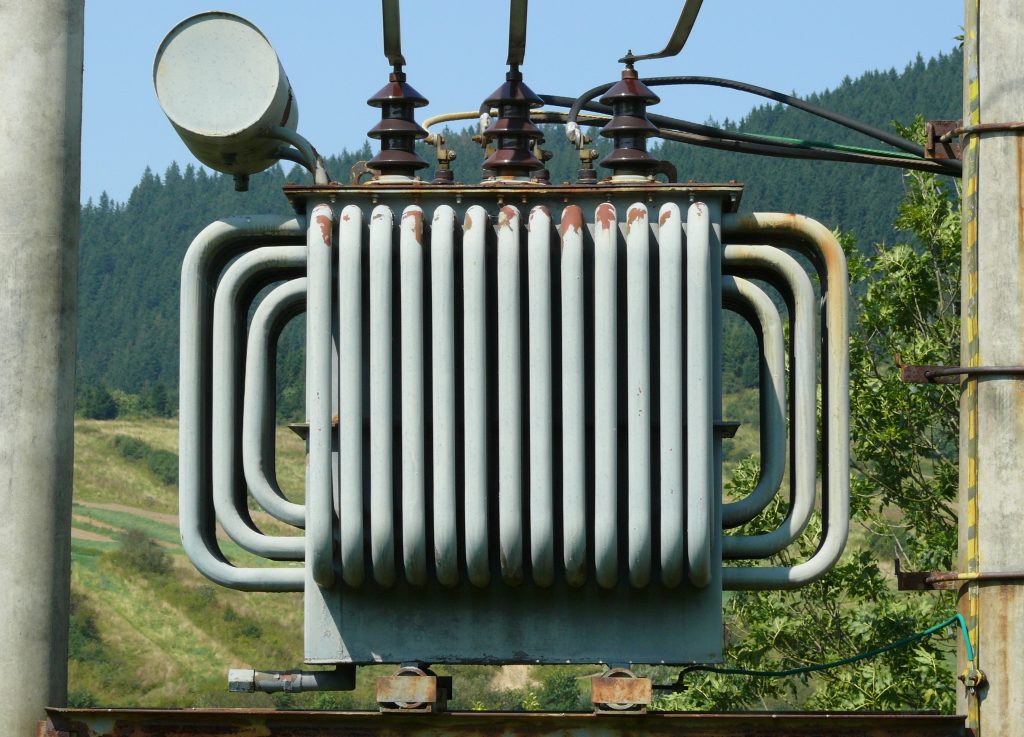
- Interaction between the air and transformer oil through the breather.
- Check your silica gel and change on a regular basis.
- Leaks
- Paper deterioration
The acidity content will increase over time in transformer oil. The interaction between moisture, temperature and oxygen will generate the acidity content.
- Sludge will form in a transformer. This is a “jelly” which settles in-between the windings, or any other crevice in the transformer, and is extremely difficult to get out. An oil change should be consider as soon as the acidity level approach the 0.14 mgKOH/g oil mark, analyzed in conjunction with other results – DGA and Furanic.
- High acidity will cause the paper deterioration to accelerate.
The dielectric strength of the transformer oil is a measure if the oil`s ability to withstand
electrical stress without failure. The presence of moisture or particles will have a direct influence on the oil`s ability to insulate.
The DGA is by far one of the most important tools for the transformer owner in detecting incipient faults in the transformer. The DGA should be done on regular basis as any internal fault will be detected months in advance.
The DGA will detect the following problems months in advance with regular testing :
- Overheating
- Loose connections
- Break in cellulose
- Arcing
- Partial discharge
- Corona
PCB is purely a health and environment issue and will not influence the working of the transformer. PCB`s are linked to cancer, kidney and liver damage, and damage to digestive organs in humans.
Transformer oil leaks can contaminate the soil and water table, which in turn will find contaminate the food chain. This is a very serious problem in South Africa and must be treated with respect and importance.
The Furanic will determine the paper deterioration in the transformer.
Recommended on a yearly basis for transformers older than five (5) years.
Function :
Silica gel breathers are fitted to oil filled transformers. The purpose of these silica gel breathers is to absorb the moisture in the air sucked in by the transformer during the breathing process.
Thus the silica gel breathers provide an economic and efficient means of controlling the level of the moisture entering the transformer or conservator tank during the breathing process.
The oil is tested to IEC,ASTM and ISO standards , helping you identify issues quickly.
- Identify if an oil is suitable for further use
- Detect whether filtration is needed
- Enhance component life and reduce oil costs
- Maximize safety and prevent untimely failures
- Gain crucial historical data to understand changes or increases in key gases